The same Pantone number can mean two different dye classes, two different processes and two different fastness profiles on two different fabrics. The reason is simple: the dye has to bond to the fibre, and every fibre has a different surface chemistry. Cellulosic fibres such as cotton have reactive sites that can form a chemical bond with the dye, whereas polyester is a hydrophobic, closed structure; you cannot apply the same dye to both. Reactive and disperse dyeing are precisely the two sides of this distinction. This article explains which fibre wants which dye, how blends are dyed, and how the choice translates into fastness, lead time and cost.
Why the fibre–dye match is decisive
A dye's adhesion to the fibre depends on the chemical compatibility between the two surfaces. Cellulosic fibres (cotton, viscose, and regenerated cellulose including TENCEL™ and LENZING™ Modal) carry many hydroxyl (–OH) groups on their surface; under the right conditions these groups can form a permanent bond with the dye. Polyester, on the other hand, is a non-polar, crystalline and tightly packed structure; at room temperature it absorbs almost no dye. That is why dye selection follows the fibre, not the colour: you know the fabric's composition first, and the dye class follows from it.
In practice this means the first line of a sourcing brief should be composition, not colour. A 100% cotton single jersey and a 100% polyester interlock go through different dyehouse flows even if you want the very same green.
Reactive dyeing: cellulosic fibres
Reactive dyeing takes its name from the reaction the dye forms with the fibre. In an alkaline medium, the reactive group of the dye molecule forms a covalent bond with the hydroxyl group of the cellulose; that is, the dye does not adhere to the fibre mechanically but chemically becomes part of it. This permanent bond is the fundamental reason for the high wash fastness of reactive dyeing.
The process typically runs warm to warm, mostly in the 40–80 °C band, and is two-stage: first the diffusion of the dye into the fibre (levelling), then the fixation step with the addition of alkali. After fixation, removing the unreacted dye through after-washing is critical; incomplete washing leads to colour bleeding in use and low rubbing fastness. Reactive dyeing offers a vivid, bright and broad colour range on cotton knit fabric; that is why it is the standard method for the t-shirt, underwear and sweatshirt groups.
Disperse dyeing: polyester and synthetics
Disperse dyeing is the method of carrying finely dispersed dye particles, which are almost insoluble in water, into polyester and other hydrophobic synthetics (polyamide, acetate). There is no covalent bond here; the dye enters the fibre structure that loosens at high temperature by diffusion and is trapped there once it cools. Because the mechanism relies on physical dissolution/dispersion, temperature is decisive.
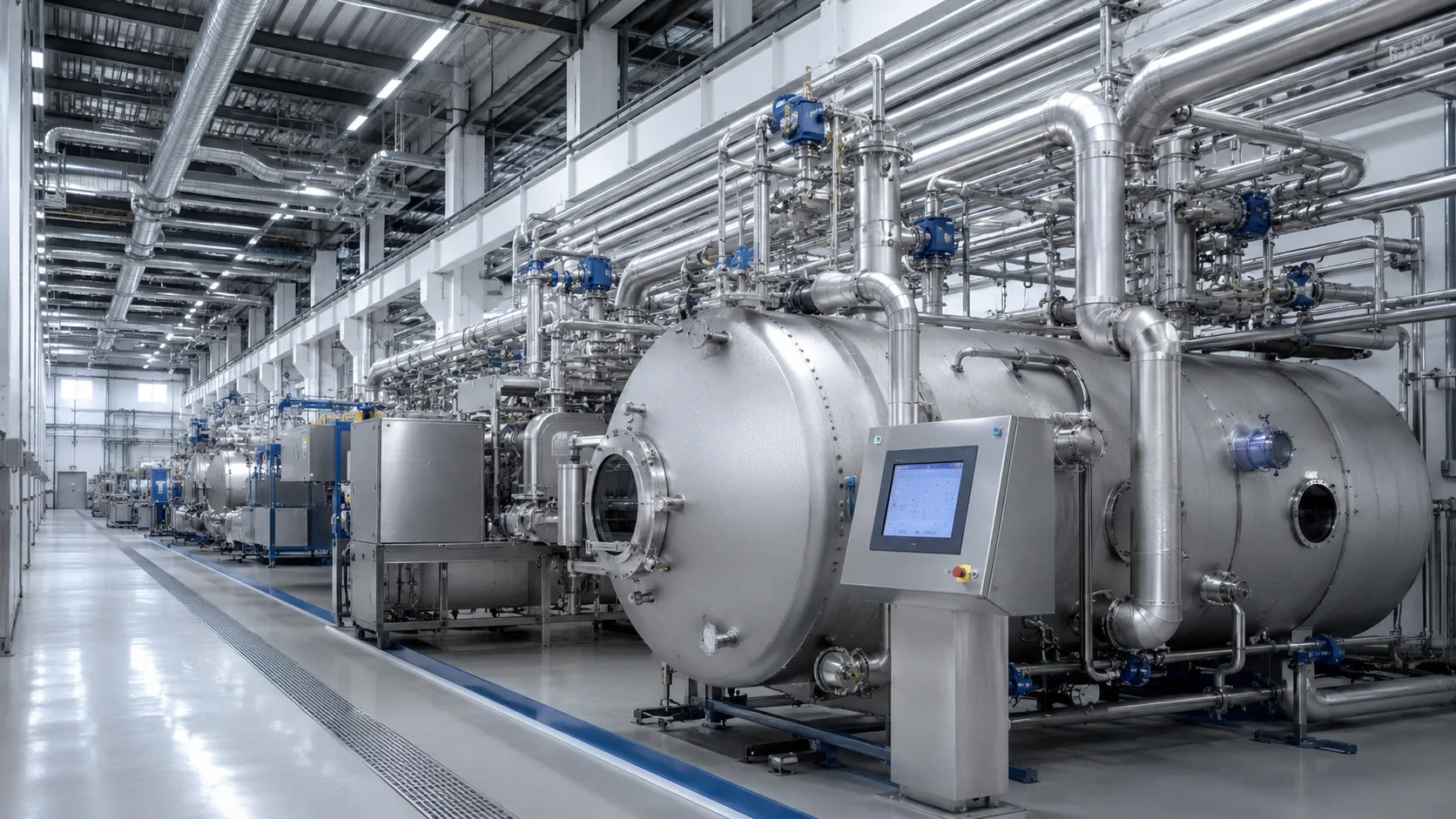
For polyester to accept the dye, the glass transition temperature of the fibre must be exceeded; for this reason disperse dyeing is typically carried out at around 130 °C under pressure (HT/HP, high temperature–high pressure process). If working in an open medium, lower temperature is possible with carrier chemicals, but this can bring odour and fastness disadvantages. A common issue in disperse dyeing is light shades migrating back to the surface at high temperature (sublimation/thermomigration); for this reason, in dark and medium shades, the excess dye on the surface is cleaned with reduction clearing, otherwise rubbing fastness drops.
Side-by-side comparison
Where the two methods diverge in practice, at a glance:
| Criterion | Reactive dyeing | Disperse dyeing |
|---|---|---|
| Suitable fibre | Cellulosic: cotton, viscose, modal, lyocell, linen | Hydrophobic synthetic: polyester, polyamide, acetate |
| Bonding mechanism | Covalent bond (chemically bonds to the fibre) | Diffusion (physically trapped in the fibre) |
| Typical temperature | ~40–80 °C, alkaline fixation | ~130 °C, under pressure (HT/HP) |
| Wash fastness | High (thanks to the covalent bond) | Medium–high; depends on after-washing |
| Colour character | Vivid, bright, wide gamut | Wide gamut; thermomigration risk in light shades |
| Typical use | Cotton knit: t-shirt, underwear, sweatshirt | Polyester knit: sportswear, lining, technical fabric |
Dyeing blends
The majority of modern knit fabrics are not single-fibre: cotton/polyester, viscose/polyester or elastane blends are common. In a blend each fibre wants its own dye, so generally two separate dye classes are used. In a polyester/cotton (PES/CO) fabric, the polyester component is dyed with disperse dye and the cotton component with reactive dye.
This opens up two routes. The first is one-bath: both dye classes are applied in the same bath within a compatible pH and temperature window; it provides shorter lead time and lower water consumption, but recipe sensitivity is high. The second is two-bath: first disperse at high temperature, then the reactive step in a separate bath; the process is longer and water consumption increases, but colour control is safer. In blends containing elastane, the temperature ceiling is watched, because excessive temperature can permanently impair the elasticity of the elastane.
Which pre-treatments prepare the fabric for dyeing before the dye bath?
If the surface of the fabric entering the dye bath is not clean, absorbent and even, even the best recipe ends in stains and unlevelness (uneven dye uptake). That is why a preparation (pre-treatment) chain runs before dyeing in both the reactive and disperse flows. On cellulosic fabric the critical steps are desizing, the caustic/enzyme treatment that imparts hydrophilicity, and the bleaching that smooths the knit surface; these steps open up the absorbency of the cotton so that the reactive dye diffuses evenly into the fibre. On polyester, the pre-wash that removes machine oils and preparation chemicals is decisive in keeping disperse dyeing from staining in light shades.
The measurable output of pre-treatment is wettability: insufficient hydrophilicity leaves a visible light-dark difference even in dark shades. In practice, the more consistent the preparation, the lower the ΔE deviation stays on repeat orders; because the dye always meets a surface of the same absorbency. In a single-point-of-contact flow like KARCEM's, where in-house knitting and the contracted dyeing and finishing are tracked in the same data chain, preparation and dyeing stay tied to one record, so within-lot homogeneity is brought under control from the very start.
How are fastness values measured, and against which standards are the thresholds set?
Fastness is the numerical expression of how well the finished fabric retains its colour under conditions of use. In the laboratory, the dyed fabric is subjected to a controlled stress (washing, light, rubbing, perspiration); then the colour change and the staining onto the adjacent white witness fabric are graded on a standard grey scale from 1 (weakest) to 5 (best). Light fastness, on the other hand, is graded on the 1–8 blue wool scale. Which threshold applies depends on the end use: the fastness expectation of frequently washed underwear is not the same as that of a textile product hung on a building façade. For the test methods and the logic behind the thresholds, you can refer to the textile test standards page.
The table below summarises the fastness tests most frequently requested in dyeing, the stress they measure and the grading scale. It also makes visible why the strengths and weaknesses of reactive and disperse dyeing cluster on different axes: the covalent bond of reactive dyeing structurally pulls wash fastness upward; in disperse dyeing, the critical axis lies on the rubbing and sublimation (migration to the surface at high temperature) side.
| Fastness test | Standard (example) | Scale | Where it is critical |
|---|---|---|---|
| Wash fastness | ISO 105-C06 | Grey scale 1–5 | Both; structural advantage in reactive |
| Rubbing (crocking) fastness | ISO 105-X12 | Grey scale 1–5 | Disperse (dark shades) and reactive dark |
| Perspiration fastness | ISO 105-E04 | Grey scale 1–5 | Underwear / products in contact with the body |
| Light fastness | ISO 105-B02 | Blue wool 1–8 | Outdoor / shop-window products |
| Sublimation (thermal) fastness | ISO 105-P01 | Grey scale 1–5 | Especially disperse (polyester) |
The values in the table are example standards based on general textile practice; the final threshold is clarified at the sampling stage according to the fabric's composition, the depth of shade and the customer's end-use specification. The important principle is this: the fibre chemistry that selects the dye class also determines in advance which fastness axis will be critical. That is why, in sample approval, not a single fastness value but a fastness set suited to the end use is requested together; for example, in baby and underwear products, wash, perspiration and rubbing fastness are evaluated together.
Frequently asked questions
Which fibre is dyed with which dye class, and what is the correct dye class for cotton and polyester?
It is the chemistry of the fibre, not the colour, that determines the dye class. Cellulosic fibres such as cotton, viscose, modal, lyocell and linen are dyed with reactive dyes; the hydroxyl (–OH) groups on their surface form covalent bonds. Hydrophobic synthetics such as polyester, polyamide and acetate, by contrast, are dyed with disperse dyes by diffusion at high temperature. That is why the first line of a sourcing brief should be the composition, not the colour.
At what temperatures do reactive and disperse dyeing operate?
Reactive dyeing runs warm to warm, mostly in the 40–80 °C band, and is two-stage: first diffusion into the fibre (levelling), then fixation with the addition of alkali. Disperse dyeing, by contrast, is typically carried out under pressure at around 130 °C (HT/HP, high-temperature–high-pressure process) in order to exceed the glass transition temperature of the fibre. This difference in temperature and pressure makes disperse dyeing more energy-intensive.
Why does reactive dyeing give higher wash fastness than disperse dyeing?
In reactive dyeing the dye forms a covalent bond with the hydroxyl group of the cellulose; that is, it does not adhere mechanically to the fibre but becomes a chemical part of it. This permanent bond delivers high wash fastness structurally and is an advantage for frequently washed underwear and baby ranges. In disperse dyeing there is no covalent bond; the dye is trapped within the fibre by diffusion, so the critical point is rubbing and sublimation fastness rather than washing.
How are blended fabrics such as cotton/polyester (PES/CO) dyed?
In a blend each fibre calls for its own dye, so two separate dye classes are generally used: disperse for the polyester component, reactive for the cotton component. There are two routes. The one-bath process is applied in the same bath at compatible pH and temperature; it lowers cycle time and water consumption but demands high recipe precision. The two-bath process runs disperse first, then reactive in a separate bath; process time and water consumption rise, but colour control is more reliable.
How do you prevent the risk of colour migration (thermomigration) on light-shade polyester?
In disperse dyeing, light shades can migrate back to the surface at high temperature (sublimation/thermomigration), and this lowers rubbing fastness. To prevent it, the excess dye on the surface is removed by reduction clearing on dark and medium shades. At sample approval we recommend that you request wash and rubbing fastness together and confirm that there is no colour migration on light grounds.
How do you ensure colour consistency on repeat orders?
The aim is to keep within-batch and batch-to-batch deviation under control, expressed as ΔE (Delta E). Automatic chemical dosing and spectrophotometric colour matching record the recipe, so that on a repeat order the colour remains visually indistinguishable. At KARCEM we confirm colour consistency with a target of ΔE<1 and with wash and rubbing fastness tests; the process moves through the sample, approval and production flow.
Fastness, process, cost and lead time
Dye selection determines not only the colour but also the production economics. The axes to consider:
- Fastness profile: The covalent bond of reactive dyeing structurally delivers high wash fastness; this is an advantage for the frequently washed underwear and baby groups. In disperse dyeing, although wash fastness is good, the critical point is rubbing and sublimation fastness; if the correct reduction clearing is not done, colour transfer is seen on light grounds. In both methods, colour fastness is thresholded according to end use.
- Colour consistency: In both classes, the goal is to keep within-batch and batch-to-batch deviation under control in terms of ΔE (Delta E). Automated chemical dosing and spectrophotometric colour matching record the recipe so that, on repeat orders, the colour remains visually indistinguishable.
- Energy and process: Because disperse dyeing requires ~130 °C and pressure, it is more energy-intensive than reactive. In reactive dyeing, the use of salt and alkali along with after-washing raises water consumption; for this reason, process water recovery and ZDHC MRSL-compliant chemical management determine the environmental impact in both methods.
- Cost and lead time: On a single-fibre fabric, a single dye class is the shortest route. In blends, a two-bath flow extends the lead time and raises the cost; one-bath shortens this but raises the recipe risk. Dark and special shades take longer than light shades because of additional after-washing and a tighter fastness threshold.
In short: if you know the fibre you can frame the dye, and if you know the dye you can frame the fastness and lead-time expectation in advance. The rest of the detail, together with printing methods, is covered in the dyeing and printing guide; for technical terms you encounter for the first time, you can refer to the Glossary.
With KARCEM
KARCEM knits greige on its own machines and coordinates reactive and disperse dyeing, printing and finishing through a vetted contract network; this means the dye-class choice, fixation and after-washing are coordinated under a single point of contact, from greige fabric to finished colour. For your cotton, polyester or blended fabric we determine the correct dye flow, and we verify colour consistency with a ΔE<1 target on the incoming lot and with wash–rubbing fastness tests. The process advances through a sample → approval → production flow; to clarify your colour brief, send us your sample and quotation request.