
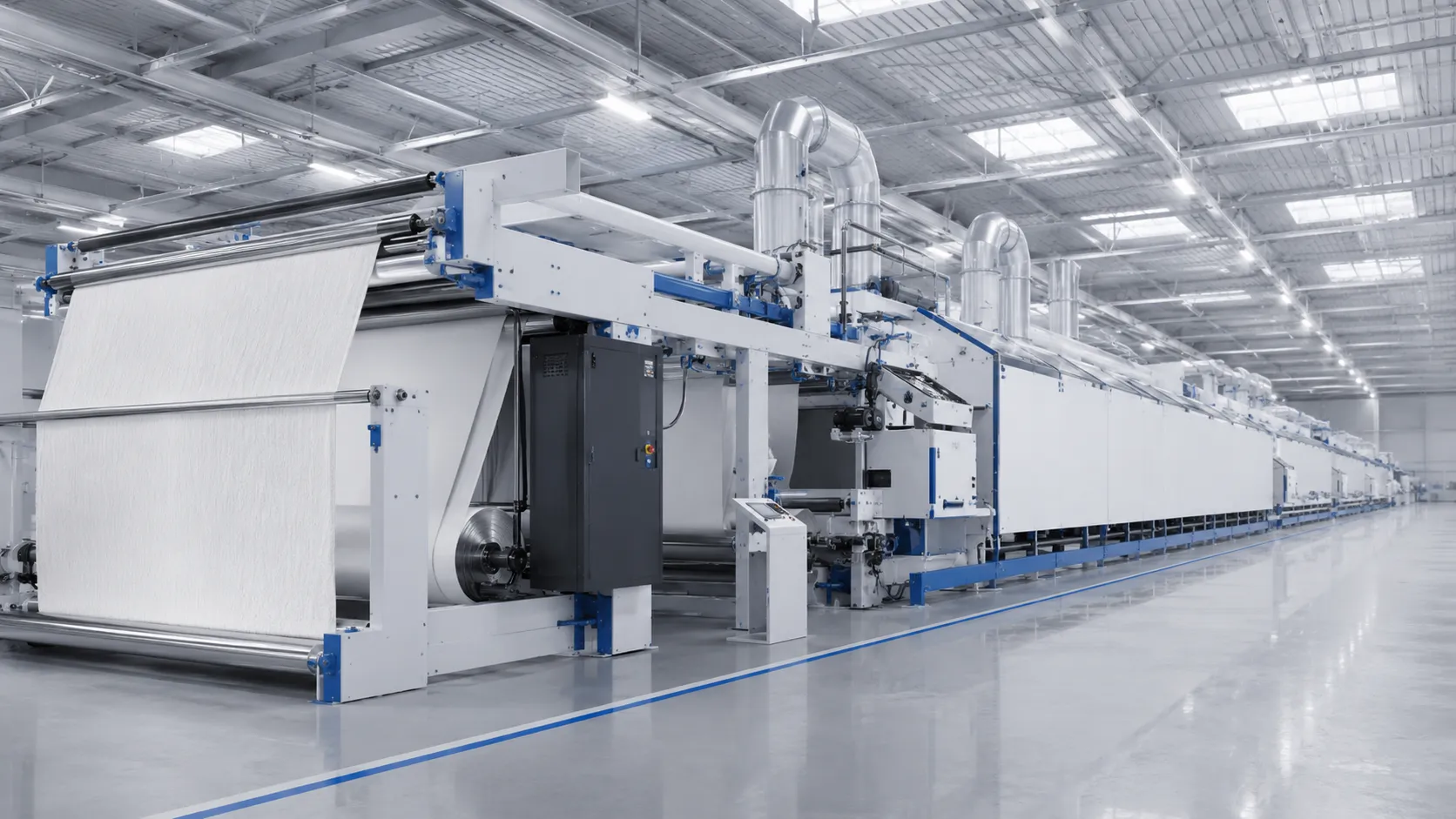
What is functional finishing and how does it differ from the dyeing process?
In knitted fabric production it is useful to think of the process in three layers: yarn and knit structure build the fabric's skeleton, dyeing and printing deliver colour and pattern, and functional finishing defines the performance the user experiences when wearing it. On the knit dyeing and printing line, the chemical process covers the dyestuff, fixation and washing steps; performance finishes, by contrast, are mostly applied after these steps, either as finishing chemistry applied on a stenter or similar machine, or as mechanical after-treatments such as brushing and compacting.
This distinction matters for a practical reason: when a buyer says "the fabric should breathe and not trap sweat," the issue usually lies not in the colour but in the finishing. The same single jersey knit can become a sports fabric that spreads sweat with a hydrophilic wicking finish, or a more static, everyday fabric with a softener-heavy finish. Functional finishing is therefore the fundamental lever for deriving different end products from the same greige structure.
This pillar page brings together the performance finishes applied to the finished product, which KARCEM coordinates through its vetted contract network under a single point of contact. If you are curious about how the chemical process runs, move to the dyeing and printing guide; if you want to go deeper into the testing and quality side of finishing, move to the quality and testing guide. The three focus articles below detail each finish family.
Which functional finish solves which need?
The most common mistake in finish selection is the assumption that "the more properties, the better." In reality, finishes carry a cost in both price and in how they interact with one another; a strong softener, for example, can improve handle while reducing moisture-transport speed, and a water-repellent finish directly conflicts with a hydrophilic wicking effect. The correct approach is therefore to define the end product's use-case scenario and select only the finishes that support it.
| Need | Functional finish | Typical end product |
|---|---|---|
| Sweat transport, fast drying | Hydrophilic / wicking finish | Activewear, performance tee, leggings |
| Odour control and hygiene | Antimicrobial / antibacterial finish | Underwear, socks, sports fabric |
| Protection against solar radiation | UV protection (UPF) finish | Outdoor, beach and summer collection |
| Resistance to water and staining | Water-repellent (durable water repellent) finish | Lightweight outerwear, functional sweatshirt |
| Soft, warm handle | Brushing (mechanical raising) | Hoodie, sweatshirt inner face, fleece feel |
| Easy ironing, low creasing | Easy-care / low-maintenance finish | Polo, shirt-like knit, office-casual wear |
| Preservation of surface appearance | Anti-pill (pilling reducer) | Sweatshirt, wool-blend knit |
Reading these pairings alongside the product context on the activewear and leggings fabric, sweatshirt and hoodie fabric and polo fabric selection pages clarifies which finish combination suits which collection. In activewear, for instance, wicking and antibacterial make sense together, whereas a classic polo prioritises easy-care and a light anti-pill.
Finishing chemistry or mechanical after-treatment: how is a finish applied?
Finishing chemistry is usually applied on the stenter: the fabric is passed through the finishing bath, then dried at a controlled temperature and, where necessary, fixed. The degree to which the finishing chemical bonds to the fabric determines both the strength of the effect and its durability to washing. Some functions are designed to bond to the fibre at the molecular level and are thus largely retained even after many wash cycles; others rely on surface adhesion that weakens over time.
Mechanical after-treatments, by contrast, are physical rather than chemical interventions. Brushing rakes and raises the fabric surface with wires to create that characteristic soft, warm feel; compacting and sanforizing compress the knit to reduce the tendency to shrink in the wash and improve dimensional stability. Because these processes permanently change the fabric's handle and dimensional behaviour, they are planned together with finishing chemistry in most performance fabrics.
| Finish type | Application logic | Principal effect |
|---|---|---|
| Hydrophilic / wicking finish | Chemical — padding + drying | Spreads water and sweat across the surface, accelerates drying |
| Water-repellent finish | Chemical — lowering surface energy | Holds the water droplet on the surface, slows penetration inward |
| Antibacterial finish | Chemical — binding an active agent | Limits microbial growth and odour formation |
| UV protection finish | Chemical — UV absorber | Reduces transmitted UV radiation, raises the UPF value |
| Brushing | Mechanical — surface raising | Soft, warm handle and a lofty surface |
| Compacting / sanforizing | Mechanical — knit compression | Reduces shrinkage, increases dimensional stability |
You can find the application details of the brushed, easy-care and anti-pill finishes, and how to balance them against one another, in detail in the surface and care finishes article. For the dimensional consequences of mechanical after-treatment, the dimensional stability and spirality page is a complementary read.
How durable is a functional finish, does it change with washing?
The value of a functional finish becomes apparent in how much of it remains after the first wash. Softener-based handle effects can weaken relatively quickly, whereas well-designed wicking, water-repellent and antibacterial finishes tolerate many washes when formulated to be "durable." The critical point here is that performance should not be declared "permanent" as a blanket statement but instead defined for a specific number of washes and temperature conditions. Let us define your specific wash-cycle target on a project basis.
The strongest tool for preserving durability is correct care. Washing at high temperatures, harsh detergents and, in particular, the repeated use of fabric softener can weaken water-repellent and moisture-managing finishes faster than expected. For this reason, the care instructions on performance fabrics should be regarded as part of the finish: without the right instructions, even the best finish can lose its function before its time.
In practice, it is safe to frame performance claims within the following structure:
- Structural after-treatments (brushing, compacting, sanforizing): because they are physically worked into the knit, they are generally resistant to washing.
- Durable finishing chemistry (durable wicking, durable water repellent): designed for a specific number of wash cycles; retained for a long time within the instructions.
- Surface-adhesion finishes (some softener-based effects): tend to weaken with time and washing, and may require periodic refreshing.
To make the difference between these categories concrete in the end product, the soundest approach is to define your target wash performance and end-use scenario together.
How is functional finish performance validated?
The biggest risk with functional finishing is that the effect is invisible: you cannot tell by hand whether a fabric "breathes" or is "antibacterial" — it is measured by standard tests. For this reason, in B2B procurement a finish should always be discussed together with the relevant test method and acceptance criterion. If there is no test protocol behind a performance claim, that claim is no more than marketing language.
The quality and testing guide and the pilling, Martindale and abrasion pages detail the testing logic; for durability on the colour side, the colour fastness and ΔE<1 guide is complementary. The table below summarises the question with which we validate each finish family.
| Finish | Validating question | Measured behaviour |
|---|---|---|
| Moisture management / wicking | How fast does water spread and dry? | Water-transport speed and drying time |
| Water-repellent finish | Does the water droplet stay on the surface? | Droplet retention and degree of wetting |
| UV protection | How much UV passes through the fabric? | Transmitted UV ratio / UPF rating |
| Antibacterial | Is microbial growth suppressed? | Bacterial reduction ratio |
| Anti-pill | Does it pill under friction? | Pilling grade (visual scale) |
| Dimensional stability | How much does it shrink in the wash? | Dimensional change after washing |
Because the specific standard codes and acceptance thresholds for these tests vary by product, end-use and target market, the numerical values need to be set on a project basis. Let us define the test set and pass thresholds required by your target market together.
How are multiple finishes engineered together?
Real collections rarely settle for a single finish: a performance tee may call for both moisture management and antibacterial, a lightweight outer layer for both water repellency and UV protection. The knack here is not to gather finishes like a list, but to manage the interaction between them. Some finishes share the same surface chemistry, so one weakens another; others reinforce each other.
The following principles work in a sound multifunctional recipe: first set a single dominant performance target (for example, "priority is moisture management"), add secondary functions at a dose that will not harm this target, and always validate the result at the lab-dip and sample stage. Because KARCEM knits in-house and plans the contracted dyeing and finishing together under one point of contact across a vetted contract network, this balance can be controlled in a single flow from the start of the product to the finish.
With conflicting demands, the decision often comes back to the end-use scenario: is the fabric an inner layer touching the skin, or an outward-facing protective layer? Answering this question clarifies which function is the priority and which is the complement, and helps avoid an unnecessary, mutually cancelling finish load.
To keep this whole guide in a single file, download the PDF version of this guide.
Frequently asked questions
What is the difference between functional finishing and the dyeing process?
Dyeing determines colour; functional finishing determines behaviour. After the fabric is dyed, finishing covers the chemical apre treatments and mechanical processes that add the performance properties felt while wearing the finished garment, such as moisture transport, water repellency, antibacterial action, UV protection, softness and easy care. So when a buyer wants the fabric to breathe, the issue usually lies not in the colour but in the finishing.
Which finish solves which need; for example, what does activewear require?
Each finish addresses a specific in-use problem: hydrophilic/wicking for sweat transport and fast drying, antibacterial for odour and hygiene, UV (UPF) and water repellency for the outdoors, sueding (sardon) for a soft warm hand, easy-care for low maintenance, anti-pill for surface durability. In activewear, wicking and antibacterial make sense together, while on a classic polo, easy-care and light anti-pill take priority.
Is finishing applied as a chemical apre treatment or as a mechanical process?
There are two main routes. Chemical finishes (softener, hydrophilic, water repellent, antibacterial) are usually padded into the fabric on the stenter and fixed by controlled drying; some bond to the fibre at the molecular level. Mechanical finishes (sueding/sardon, compacting, sanforising) physically alter the surface or the dimensional behaviour. Most performance fabrics use both together.
Is functional finishing permanent, or does it weaken with washing?
Durability varies by finish. Mechanical finishes (sueding/sardon, compacting, sanforising) are physically worked into the knit and are generally wash-resistant. Durable chemical finishes (durable wicking, durable water repellent) are engineered for a defined number of wash cycles and are retained when care instructions are followed. Softener-based surface effects, by contrast, weaken over time. That is why a performance claim must always be defined together with a specific number of washes and a temperature condition.
How do you verify that the finishing performance actually works?
The effect cannot be judged by eye; it is measured by standard tests. Moisture management is verified by water transport rate and drying time, water repellency by spray rating and wetting degree, UV protection by UV transmittance/UPF rating, antibacterial action by bacterial reduction rate, and anti-pill by pilling grade. In B2B purchasing, a finish must always be discussed together with the relevant test method and acceptance criterion; without a protocol behind it, the claim is no more than marketing language.
How are multiple finishes engineered together on the same fabric?
Finishes must be sequenced so they reinforce one another, and conflicting effects must be avoided; for example, water repellency and hydrophilic wicking are directly opposed, and a high softener dose lowers moisture transport. The right recipe is built by first defining a single dominant performance target, then adding secondary functions at doses that do not harm that target, and finally validating it at the lab-dip and sampling stage. The decision usually comes down to whether it is an inner layer or an outer protective layer.