
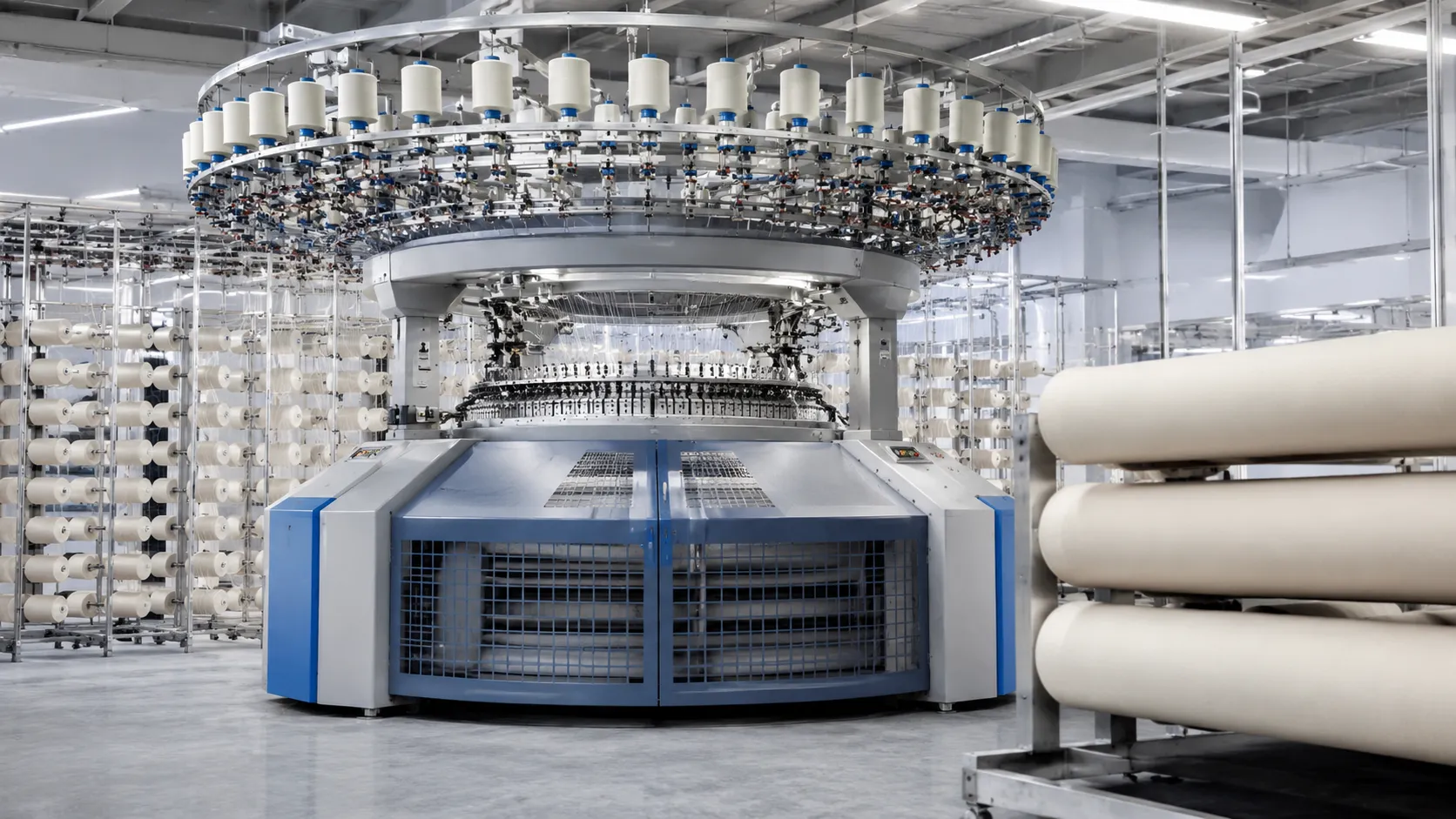
What is the fundamental difference between combed, carded and open-end yarn?
The handle, lustre and long-term appearance of a knitted fabric are largely determined by the yarn. Starting from the same cotton bale you can obtain four different fabrics, because two independent decisions come into play: how the fibre is prepared at the card (combed or uncombed) and how the fibres are turned into yarn (ring or rotor/open-end).
In the industry, the terms "combed" and "carded" describe the fibre preparation: combed means the fibre has been combed, carded means it has not. "Open-end", on the other hand, is a spinning method and is almost always fed with uncombed fibre. For this reason the three do not sit on a single axis but on two separate axes; to make the comparison meaningful, the two must be considered together. Ring yarn is the backbone of this trio: both combed and carded yarns can be spun on the ring system.
How do combed and uncombed (carded) yarns differ?
By its nature, cotton fibre comes in varying lengths. In carding, the fibres are opened, cleaned and parallelised; however, the short fibres are also retained within the yarn body. In combing, a combing step is added in between: the comb generally removes a significant proportion of the fibre mass (short fibres and neps). This loss is the main reason combed yarn is more expensive — but it is also the step that determines quality.
The fact that the remaining fibres are longer and more parallel produces three concrete results: the tensile strength of the yarn increases, the fibre ends protruding from the surface (hairiness) decrease, and the yarn reflects light more evenly, so the surface looks brighter and cleaner. In single-jersey structures such as single jersey this difference is visible to the eye; combed single jersey gives a noticeably smoother and more "premium" handle than carded single jersey.
It would be wrong to say that carded yarn is poor quality. Carded yarn offers a good cost-performance balance and a bulky, full handle; it is sufficient and even preferred in many products such as sweatshirts, underwear linings, home textiles and printing grounds. The point is not "good versus bad" but matching the yarn's properties to the product's objective.
What is the difference between ring spinning and open-end (rotor) spinning?
Once fibre preparation is complete, the second decision is the spinning method. The ring system is the older but still highest-quality method: the fibres take twist around a spindle and traveller (ring) to form a continuous, tight yarn. Combed yarn is always spun on the ring system; for fine counts (high Ne) and products requiring high strength, ring is indispensable. For fine, tight yarns, improved ring variants such as compact yarn reduce hairiness even further.
In the open-end (rotor spinning) method, the fibre sliver is separated into individual fibres and carried by an air stream into a high-speed rotating rotor, where it is gathered and twisted. The "opening" of the fibre flow gives the method its name. Open-end is many times faster and cheaper than ring; the yarn it produces is bulkier and more even (with fewer irregular thick-thin places) but, because of the arrangement of the fibres, comparatively lower in strength. Open-end is generally used in medium and coarse counts, in areas such as denim, towelling, sweatshirts and home textiles; in practice it cannot reach very fine counts.
When these two axes are combined, the typical combinations are as follows: combed = combed + ring, carded = uncombed + ring, open-end = uncombed + rotor. In theory, combed open-end is also possible, but because its economic logic is weak it is commercially rare.
| Yarn type | Fibre preparation | Spinning method | Distinctive feature |
|---|---|---|---|
| Combed | Combed — short fibres removed | Ring (mostly) | Cleanest, strongest, brightest; highest cost |
| Carded | Uncombed — short fibres remain | Ring | Full, slightly hairy, balanced cost |
| Open-end (rotor) | Uncombed | Rotor / open-end | Bulky, even, fast/economical; low strength |
How do combed, carded and open-end compare in terms of performance?
When selecting a yarn type, five criteria must be assessed together: strength, hairiness/surface cleanliness, handle, cost and field of use. The comparison below summarises the relative behaviour among the three types rather than absolute laboratory values, because actual values vary with cotton quality, count and twist level.
Strength is directly related to the fibre parallelism and twist structure of the yarn. Thanks to its long, parallel fibres, combed yarn gives the highest breaking strength; carded falls one step below; open-end generally has the lowest strength owing to its rotor structure. This difference shows itself in fine knits and in fabrics working under high tension (e.g. fine single jersey, elastane structures). For behaviour relating to elastane use, see our elastane and knitted fabric guide.
Hairiness and pilling tendency increase with the abundance of short fibre ends emerging from the surface. In combed yarn the short fibres are removed, so the surface is cleanest and the pilling tendency is lowest; carded is at a medium level; although the open-end surface is even, it can be disadvantageous in terms of pilling because of the presence of short fibres. For the objective measurement of this behaviour, the standards in our pilling and Martindale abrasion testing guide are used.
Handle is subjective but important: combed is smooth and cool, carded is full and soft, while open-end gives a bulky and "towel-like" fullness. The cost ranking, however, generally works in reverse — open-end is the most economical, carded is in the middle, and combed is the most expensive. For this reason the right choice is never "the highest-quality yarn" but the yarn best suited to the product's price-performance target.
| Property | Combed | Carded | Open-end |
|---|---|---|---|
| Strength | Highest | Medium-high | Lowest |
| Hairiness / pilling tendency | Lowest | Medium | Medium-high |
| Surface cleanliness / lustre | Highest | Medium | Even but matt |
| Handle | Smooth, cool | Full, soft | Bulky, full |
| Achievable count range | Reaches fine counts | Medium-fine | Limited to medium-coarse |
| Relative cost | Highest | Medium | Lowest |
| Typical use | Premium T-shirt, piqué, fine single jersey | Sweatshirt, printing ground, home textile | Denim, towelling, heavy sweatshirt, lining |
How do yarn count and twist affect yarn quality?
Yarn quality does not end with the "combed/carded/open-end" label alone; yarn count (Ne, Nm, tex) and twist level are at least as decisive as the spinning method. As the count rises (for example 40/1 instead of 30/1), the yarn becomes finer, the fabric lighter and gains a more elegant handle — but fine yarn requires longer, higher-quality fibre, which usually makes combed and ring spinning essential. Because open-end, by its physical nature, cannot in practice reach very fine counts, it drops out of projects targeting light and fine fabrics.
Twist, in turn, determines the tightness of the yarn. High twist increases strength and abrasion resistance and keeps the surface cleaner, but it can stiffen the handle and affect the spirality (twisting in the knit) tendency. Low twist gives a softer but hairier and less durable yarn. For this reason the final weight, handle and durability of a fabric are the combined result of the yarn type + count + twist trio. Our weight/GSM guide details how these decisions are reflected in the fabric weight.
A practical example: a fine single jersey knitted with 40/1 combed ring yarn is ideal for a premium T-shirt — smooth, light and durable. Knitting the same product with 20/1 open-end makes both the fineness and surface cleanliness impossible; but 20/1 open-end is both economical and functional for a heavy sweatshirt or lining. The right decision begins with the product's intent.
Which yarn type should be preferred for which product?
Yarn selection must be decided together with the fabric structure and end use. In products that are assessed visually at the surface, touch the skin directly, or where print/pattern sharpness is critical, combed yarn provides an advantage; because low hairiness preserves both appearance and durability over a long time. In the industry, combed yarn is a common choice for fine single-jersey T-shirts, quality piqué and detailed printing grounds.
Carded yarn serves a broad mid-segment where cost matters but a reasonable surface quality is sufficient: everyday sweatshirts, inner linings, home textiles and printing grounds. Open-end, on the other hand, makes sense in products where bulk, fullness and low cost come to the fore and where strength is supported by the knit structure — heavy sweatshirts, towelling structures, denim and linings are typical examples of this.
Yarn type selection is not made in isolation; it must be considered together with the raw material decision covered in our fibre and yarn guide. The same spinning logic also applies to non-cotton fibres; the cotton, modal, viscose and Tencel comparison complements the effect of fibre selection on handle and performance. If there is a sustainability target, recycled yarn options can also be considered; rPET and recycled cotton blends establish a performance balance together with the spinning method.
The right yarn decision determines the final success of the fabric before weaving/knitting. There is no "universally best yarn" that simultaneously optimises the targeted handle, weight, durability and cost; the most suitable balance is established separately for each product. When fibre quality and twist are chosen correctly, colour retention and surface uniformity also become more predictable in the subsequent dyeing and printing stage.
Frequently asked questions
What is the basic difference between combed, carded and open-end yarn?
Combed yarn is made from combed fibre; because short fibres and neps are removed, it is the cleanest, strongest and most lustrous product. Carded yarn is non-combed, so the short fibres stay in, giving it a bulkier, slightly hairy character at a balanced cost. Open-end, by contrast, is a spinning method: a rotor-spun yarn that is bulky and even but comparatively low in strength. The difference begins both in fibre preparation and in the spinning method.
Why is combed yarn more expensive than carded yarn?
In the combing process, the combing step removes a significant proportion of the fibre mass (short fibres and neps). This loss is the main reason combed yarn costs more. In return, the remaining fibres are longer and more parallel, which delivers higher tensile strength, less hairiness and a more lustrous surface. So the price difference comes directly from the very step that determines quality.
What is the difference between ring spinning and open-end (rotor) spinning?
In ring spinning the fibre strand is drafted with real twist, forming a continuous, tight yarn around the spindle and ring traveller; it is the method that gives the highest quality, and combed yarn is always spun on the ring system. In open-end the fibre strand is separated into individual fibres and carried by an air current to a rotating rotor, where it takes its twist. Open-end is many times faster and more economical and produces a bulkier, more even yarn but with comparatively lower strength.
How do the three yarn types rank for strength and pilling?
These are relative behaviours; the actual values change with cotton quality, count and twist. In strength, combed is highest, carded is medium-high and open-end is lowest. In hairiness/pilling tendency, combed is lowest (because short fibres are removed), carded is medium and open-end is medium-high. Although the open-end surface is even, the presence of short fibres can be a disadvantage for pilling. Carded sits as a balanced middle ground between the two.
How do yarn count (Ne) and twist affect fabric quality?
Yarn count expresses fineness and twist expresses how tight the yarn is. As the count rises (for example 40/1 instead of 30/1) the yarn becomes finer, the fabric lighter and the hand more refined; however, finer yarn requires longer, higher-quality fibre and most often makes the combed and ring system mandatory. High twist increases strength and abrasion resistance and keeps the surface clean, but it can stiffen the hand and influence the tendency to spirality.
Which yarn type should be preferred for which product?
The choice must be aligned with the fabric's price-performance target. For products where surface quality stands out — premium T-shirts, fine single jersey, quality piqué, detailed print grounds — combed offers an advantage. Where cost matters, in everyday sweatshirting, inner linings, home textiles and print grounds, carded is sufficient. Where bulk, fullness and low cost stand out — denim, towelling, heavy sweatshirting and linings — open-end makes sense. There is no universally best yarn.