What is the fundamental difference between cotton, modal, viscose and Tencel?
Because they are all chemically composed of cellulose, they can be dyed with the same reactive dye class and have a hydrophilic (moisture-loving) structure. The distinction lies in how the fibre is formed: cotton grows naturally as a seed fibre; viscose is produced by the classic viscose process, modal by a modified/high-wet-modulus viscose process, and Tencel (the generic name being lyocell) by a waste-free, closed-loop solvent process. These process differences govern the moisture, strength and drape behaviour of the fibres.
Regenerated cellulosics generally offer a smoother surface, more fluid drape and higher lustre than cotton. Cotton, by contrast, stands out for its mature supply chain, broad certification ecosystem (OEKO-TEX 100, GOTS) and predictable performance. In many B2B collections the final solution is not a single fibre but a blend: for example, cotton-modal for skin-friendly softness, viscose-elastane for drape and stretch.
How do these fibres differ in terms of drape and handle?
Fibre alone does not determine handle; the knit construction (single jersey, interlock, rib) and fabric weight are at least as influential as the fibre. Even so, the fibre's natural tendency sets the character of the collection. Viscose and Tencel come to the fore in fluid products with body-following drape (dresses, loose tees); cotton or cotton-rich blends are preferred in more structured, bodied jersey and sweat products.
Modal, with its silky surface and low fuzzing/pilling tendency, is especially popular in underwear and premium tees. Tencel/lyocell, thanks to its wet strength, can be used in products that are both fluid and durable, making it an attractive middle ground for collections that want "drape plus performance". Handle is difficult to measure objectively; for this reason the final decision is best made on a physical sample during the lab-dip and sample approval process.
How do moisture management and breathability compare?
Cellulosic fibres take moisture into the fibre (absorption) and keep the skin cool; this is an advantage for everyday wear and warm-climate products. By contrast, in rapidly carrying moisture to the surface and evaporating it (wicking + quick drying), pure cellulosics lag behind hydrophobic fibres such as polyester; when wet, they dry more slowly.
For this reason, products where heavy perspiration is expected use blends that combine cellulosic comfort (skin contact) with synthetic wicking. When laboratory verification of moisture performance is required, absorption and drying tests can be planned; as specific values depend on the fabric construction, let us define these together on a product-by-product basis.
Which fibre is stronger in terms of durability and dimensional stability?
Durability in knitted fabric is determined not only by the fibre; combed/carded yarn quality, twist and knit density are also critical. Even so, the wet-strength difference has practical consequences: viscose-rich products can fatigue faster under repeated washing and carry a dimensional stability risk; Tencel and modal are safer in this respect. Cotton, with the right Sanforising/compacting finish, brings shrinkage values into a predictable range.
On the fuzzing/abrasion side, the smooth surface of modal and Tencel generally results in a lower pilling tendency; however, the final result varies with knit and finishing. We therefore recommend carrying out shrinkage/dimensional stability and pilling/Martindale abrasion tests before the collection enters the technical pack.
Fibre selection matrix: drape, moisture, strength and sustainability together
| Fibre | Drape / Handle | Moisture absorption | Wet strength | Sustainability note |
|---|---|---|---|---|
| Cotton (natural) | Bodied, matt, cottony | Good | High (does not drop when wet) | Can be water/pesticide intensive; GOTS/OEKO-TEX and organic/BCI options available |
| Viscose (classic viscose) | Most fluid, lustrous | Very good | Low (weakens when wet) | Process-chemical intensive; requires certified/responsible sourcing |
| Modal (HWM viscose) | Silky soft, fluid | Very good | Medium-high | Improved versus viscose; certified variants available |
| Tencel / lyocell | Full, controlled drape | Good-very good | High | Closed-loop solvent process; high solvent recovery |
The practical summary from the matrix: if you want maximum drape and lustre, viscose stands out; for skin-friendly silky softness, modal; to balance drape with strength/sustainability, Tencel; and for predictable, bodied and broadly certified supply, cotton. Often the best result is achieved by blending these fibres.
How do the sustainability and regulatory profiles differ?
For B2B buyers targeting the European market, sustainability is no longer optional; regulations such as the ESPR and the Digital Product Passport (DPP) demand traceability of fibre content, sourcing and chemical management. Management of the process chemicals of cellulosic fibres is documented within the ZDHC/MRSL framework, and product safety with OEKO-TEX 100. GRS/RCS are appropriate for recycled-content claims.
In practice, a sustainability claim carries marketing risk unless it is backed by the correct certification chain. Which certification combination is required for which fibre/blend must be chosen according to the product objective; review our certification scope and let us define it to suit your needs. For recycled cellulosic or recycled yarn options, our recycled yarn guide also offers direction.
How do cost, supply and dyeing behaviour affect the decision?
On the dyeing side, all four fibres give high colour fastness with reactive dyestuffs; but regenerated cellulosics generally produce more vivid, brighter colours thanks to their smooth surfaces. In blended fabrics (for example cotton-polyester), as two separate dye classes are required in a single bath, metamerism and colour matching must be carefully managed. For dye selection and ΔE targets, you can refer to our colour fastness and ΔE and reactive/disperse dyeing guides.
The cost decision is not determined by yarn price alone; wet strength, waste, shrinkage management and certification requirements all affect the total cost. The end-use table below matches fibre selection to the product objective.
| Collection objective | Recommended fibre / blend | Rationale |
|---|---|---|
| Fluid dress / draped top | Viscose or viscose-elastane | Most fluid drape, lustre |
| Premium tee / underwear | Modal or cotton-modal | Silky softness, low fuzzing |
| Drape + strength balance | Tencel or Tencel-cotton | High wet strength, favourable process profile |
| Bodied jersey / sweat | Cotton or cotton-rich | Structure, predictability, broad certification |
| Active / heavy perspiration | Cellulosic + synthetic blend | Comfort + wicking/quick drying |
Fibre selection takes on meaning within the whole logic of fibre and yarn; for broader context, our fibre and yarn guide, combed/carded/open-end and yarn count Ne/Nm/tex content are complementary. When you design the right fibre/blend, knit and finishing combination together, the handle, drape and strength you are targeting become predictable.
Cotton, modal & viscose knit fabric we manufacture — composition and GSM
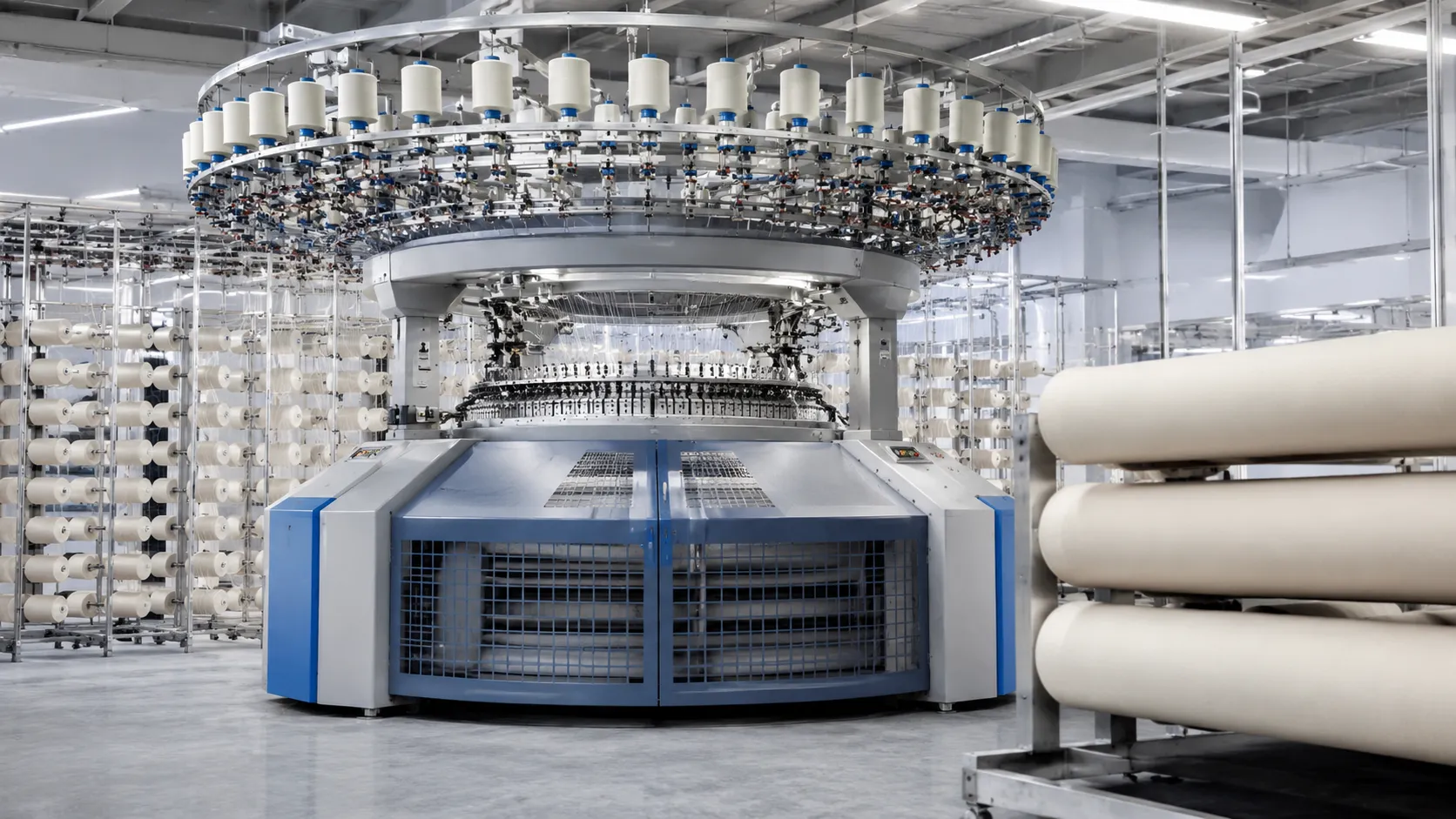
As a cotton, modal & viscose knit fabric manufacturer and supplier in Turkey, KARCEM knits greige fabric on its own circular machines and coordinates dyeing, printing and finishing across an audited contract network. Typical constructions and weight ranges we produce:
| Composition | Weight (g/m²) | Width | Typical use |
|---|---|---|---|
| 100% combed cotton | 140–200 | Tubular | Tees, basics |
| Modal / cotton blend | 130–180 | Tubular | Premium-drape tees |
| Viscose / cotton | 130–180 | Tubular | Fluid fashion tops |
| TENCEL™ lyocell blend | 140–190 | Tubular | Sustainable premium fashion |
Capacity, MOQ and lead time
Our knitting capacity is around 450 tonnes per month, so we serve both low-MOQ development runs and high-volume repeat programmes. MOQ is not a single figure — it is defined per colour, weight and process together, so a realistic minimum becomes clear once we see your combination. Lead time depends on quantity, finish and dye-lot planning and is confirmed with your quote. See our MOQ, sampling and lead-time and lab-dip approval pages, then request a cotton, modal & viscose knit fabric quote with your composition, GSM and quantity.
Certifications and compliance
We work with GOTS, OCS, GRS and RCS certified processes and BCI cotton. Colour is targeted at ΔE<1 versus the approved lab dip, with fastness and dimensional-stability testing available on request. See our certificates and colour-fastness pages for detail.
OEM, private-label and export
KARCEM supplies cotton, modal & viscose knit fabric as an OEM and private-label knit fabric manufacturer: greige-to-finished production under your specification, ready for your own cut-and-sew or garment supplier. We export knit fabric from Turkey to the EU, UK, Middle East, North America and Russia on EXW, FOB or CIF terms. For programme pricing per kilogram, share your annual volume and target constructions.
Frequently asked questions
What is the minimum order quantity (MOQ) for cotton/modal/viscose knit fabric?
MOQ is flexible and set per colour and construction. We handle development lots and high-volume repeat orders; share your blend, GSM and quantity and we confirm the minimum with the quote.
Which fibre should we choose for a fluid-drape collection?
Modal, viscose and TENCEL™ blends give a softer, more fluid drape than 100% cotton; we advise the blend and gauge for your target hand while keeping wet-strength and durability in view.
Are the cellulosic blends certified/sustainable?
Yes. We can supply GOTS organic cotton and certified man-made cellulosic (e.g. TENCEL™) blends with valid transaction certificates.
Do you export these knit fabrics?
Yes. We export cotton, modal and viscose knits from Turkey to the EU, UK, Middle East, North America and Russia on EXW, FOB or CIF terms.
What is the fundamental difference between cotton, viscose, modal and Tencel?
Cotton is a natural cellulosic fibre that grows in nature; viscose, modal and Tencel/lyocell are regenerated cellulosic fibres produced from wood pulp cellulose. All four are cellulose-based, so they are dyed with the same reactive dye class and are hydrophilic. The difference lies in the manufacturing process: viscose is classic viscose, modal is high-wet-modulus viscose, and Tencel is produced via a closed-loop solvent process. These process differences govern moisture, strength and drape behaviour.
Which fibre is strongest when wet, and which loses strength?
Cotton is strong when dry and does not lose strength when wet. Classic viscose, by contrast, loses significant strength when wet; it is therefore more sensitive to washing and shrinkage and carries a dimensional-stability risk. Modal has medium-to-high wet strength, while Tencel/lyocell has high wet strength and is more stable than viscose. In knit fabric, yarn quality, twist and knit density also affect durability.
Which fibre should we choose for a fluid-drape collection?
For fluid dresses and draped tops, viscose or viscose-elastane gives the most fluid, lustrous drape. If you want to balance drape with strength, Tencel or Tencel-cotton provides high wet strength. In premium T-shirts and underwear, modal offers a silky softness; for bodied jersey and sweatshirting, cotton is preferred. Hand should ultimately be assessed together with weight and knit construction.
Are cellulosic fibres adequate for active sportswear?
All four fibres are hydrophilic and keep the skin cool by absorbing moisture into the fibre; this is an advantage for everyday and warm-climate garments. However, absorption and wicking (moving moisture to the surface) are different concepts. Pure cellulosics lag behind fibres such as polyester when it comes to rapidly moving moisture to the surface, evaporating it and drying quickly. For this reason, blends that combine cellulosic comfort with synthetic wicking are used for intense perspiration.
How do the fibres differ in terms of sustainability, and which certifications are required?
Cotton's environmental burden is agricultural (water, pesticides), whereas the burden of viscose/modal/Tencel lies on the process side. Tencel/lyocell recovers the solvent at a high rate through a closed-loop process and generally has the most favourable process profile among regenerated cellulosics. In the European market, ESPR and the DPP require traceability; process chemicals are documented with ZDHC/MRSL, product safety with OEKO-TEX 100, and recycled content with GRS/RCS.
How are these fibres dyed, and is colour performance different?
Because all four are cellulose, they are dyed with reactive dyestuff and deliver high colour fastness. However, thanks to their smooth surfaces, regenerated cellulosics generally produce more vivid, brilliant colours, while cotton is more predictable. In blended fabrics (for example cotton-polyester), two separate dye classes are required in a single bath, so metamerism and colour matching must be managed carefully. ΔE targets are finalised during the lab-dip approval process.
One contact, end to end: knitting on our own machines · dyeing, printing and finishing at supervised contract partners · lot quality control · ΔE<1 colour verification · certificates and TCs · sampling · shipment. See the production process →
Certification and documents: Certifications · How to Verify a Textile Certificate